
“ Porque Madrid, en realidad, no es nada especial. No tiene un gran río, ni a penas rascacielos, ni canales, ni lagos, ni gloriosas ruinas, ni mar. A Madrid le faltan muchas cosas pero tiene la gente por las calles, el rincón inesperado, la variedad, el contraste, la animación constante y sus costumbres. Vale la pena levantarse temprano- por una sola vez- para vivir un día de vida de Madrid. ”
“Because, Madrid, in reality, is nothing special. It does not have a great river, and hardly any skyscrapers, no channels, no lakes, neither glorious ruins, nor sea. Madrid lacks a lot of things. But it has people in the streets, the unexpected corner, the variety, the contrast, the constant animation, and its customs. It is worth getting up early – for at least once – to live one day of the life of Madrid.”
Miguel Mihura
DESCRIPTION
Madrid is almost at the center of the Iberian Peninsula. It is the capital of Spain and its elevation of about 2,120 feet makes it one of the highest capitals in Europe. In the words of a local proverb “From Madrid to heaven, and heaven a little window from which to see it”
HISTORY
The earliest archeological evidence of human inhabitation of Madrid dates to 500,000 years ago. There remains cultural evidence of Celtic, Roman, and Visigoth settlements. The name of Madrid, however, and the city’s establishment as the city it is today originates in 865 when Muslim rulers built a fortress as a defensive fortification against Christian attacks from northern Espana.
“Magerit, ‘land rich in water’. This is how the Arabs called this area on the central plain of the Iberian Peninsula, close to Sierra de Guadarrama…The first historical record of Madrid dates back to the year 865, when Emir Muhammad I commissioned the construction of a fortress in the village of Mayrit, on the banks of the river Manzanares. ‘Mayrit’ means ‘plenty of waterways’, which is why the city’s first recorded coat of arms read, ‘I was built on water / My walls are made of fire / This is my flag and my coat of arms’. Madrid belonged to the Islamic world until 1083, when Alfonso VI of Castile took over the city.” https://www.esmadrid.com/en/history-madrid
For the next 500 years, Madrid was a small, relatively poor town. It’s location in the center of the Iberian peninsula, however, was of great importance. In 1561, Felipe II (1527–1598), moved the Spanish court from Toledo to Madrid precisely because it had a power vacuum despite its strategic importance.
“Felipe established his capital in Madrid in 1561 and gave the court a permanent home for the first time. Madrid – a relatively small and unimportant town at the time, though it had a royal fortress – was centrally located and had great potential to be developed into a proper setting for a world empire. The older centers of the Castilian monarchy – for example Burgos, Valladolid, Toledo, and Seville – had old and cramped central districts that would not easily lend themselves to restructuring. Each of them, moreover, had a long and proud municipal history and served as the base of power for various aristocratic clans. By choosing Madrid as his capital, Felipe could establish its identity as the royal court and avoid some of the factional strife that might have challenged his authority in more prestigious cities. Secure on his throne at the apex of a global monarchy, Felipe of Spain was the most powerful sovereign in Europe.” A Concise History of Spain
“From around 20,000 in 1561, the population rose to approximately 55,000 by 1584, and approached 90,000 by 1600. Others attracted to the capital from the surrounding provinces did much to shape Madrid’s future character and outlook. The town acted as a magnet, drawing in thousands of people from different ends of the social spectrum. It inevitably became a mecca for drifters, gamblers and prostitutes and was home to a great many of the very poor, who relied upon the charity of the city’s numerous religious institutions. Travellers from northern Europe and Italy began to write about Madrid, usually in uncomplimentary terms, highlighting its ‘filthy’ streets, lack of drains and ‘unbearable stench’. Hindered by the lack of a navigable river, the town produced almost nothing economically. Chronic unemployment made crime a way of life, and those traders that did develop were virtually all oriented towards the Court and the aristocracy.” Graham Shields
“Affectionately nicknamed El Rey Alcalde (the ‘King Mayor’), Carlos III left an indelible mark on Madrid. Fascinated by the Enlightenment ideas of progress, he sought to improve from the top and became the very model of an enlightened despot as he strove to make Madrid a noble, modern capital. He challenged the privileges of the religious orders and in 1767 expelled the Jesuits from Spain. In Madrid great improvements were made to the city’s infrastructure. In 1761 the dumping of waste in the streets was prohibited and the building of sewers and street lighting began. Houses were numbered and street cleaning and refuse collection were introduced. New public buildings were erected (including the Post Office in the Puerta del Sol and the Puerta de Alcal), and the beautiful Paseo del Prado was completed in 1782. Part of the gardens of the Palace of the Buen Retiro was opened to the public after the King moved from there to the recently completed Royal Palace in 1767. Reform and an improved economy created a feeling of wellbeing in late 18th century Madrid, and although popular reaction at the time to the King’s improvements was ambiguous, it is undeniably apparent that the quality of life in the city improved immeasurably under Carlos III.” Graham Shields
Madrid was under the French troops during the Napoleonic Wars until on May 2, 1808, the Spaniards started the Guerra de la Independencia. The Spanish monarchy is reestablished in 1814.
List of Historic Humans of España and España Historic Timeline
MADRID: PALACIO REAL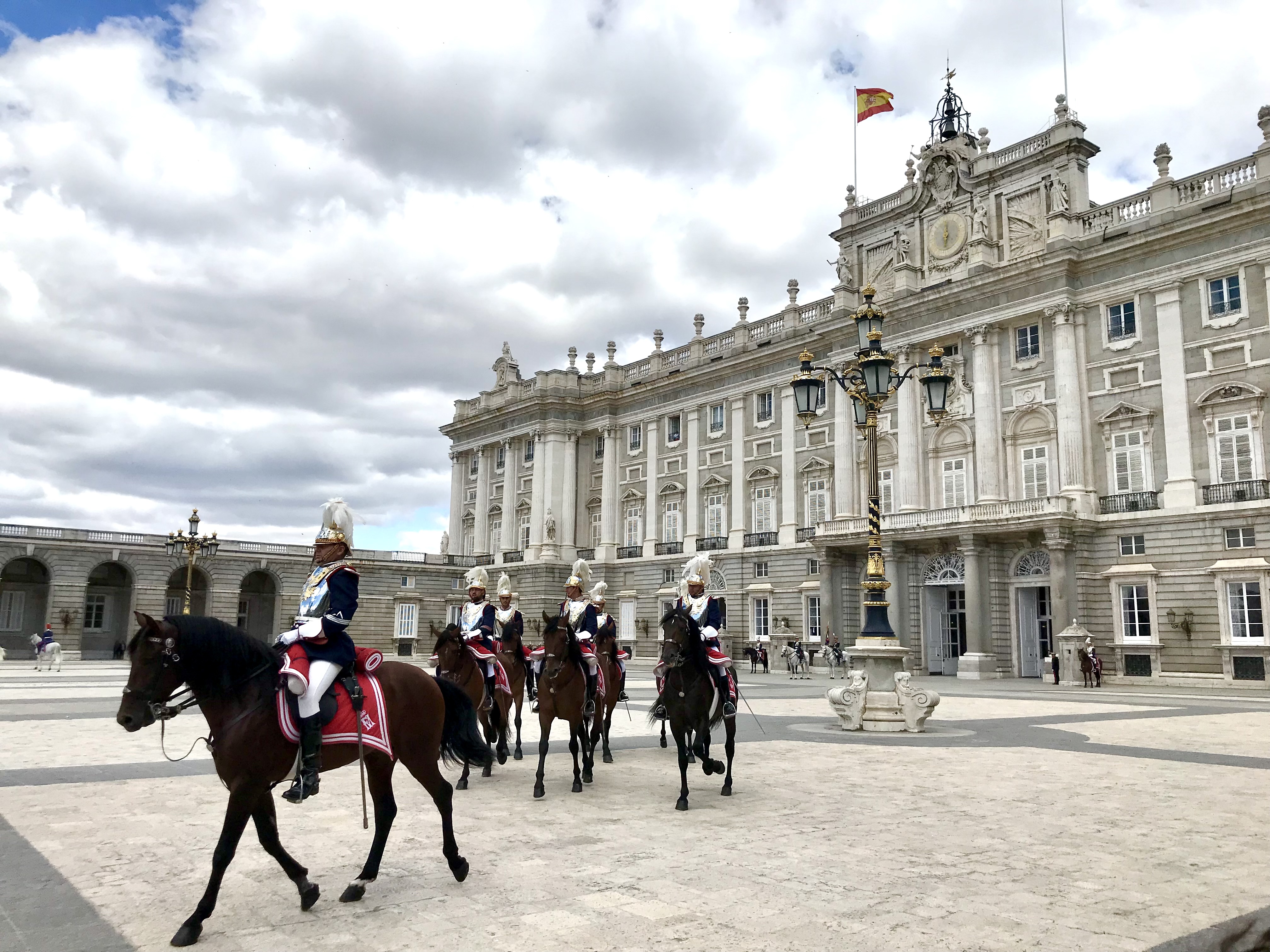
Madrid: Palacio Real The Palacio Real of Madrid is the largest palace in Europe, with over 3,000 rooms. The predominant Italian and French influence is explained by Felipe V’s upbringing in France and Carlos III’s formative years in Napoli.
MADRID: PARQUE EL RETIRO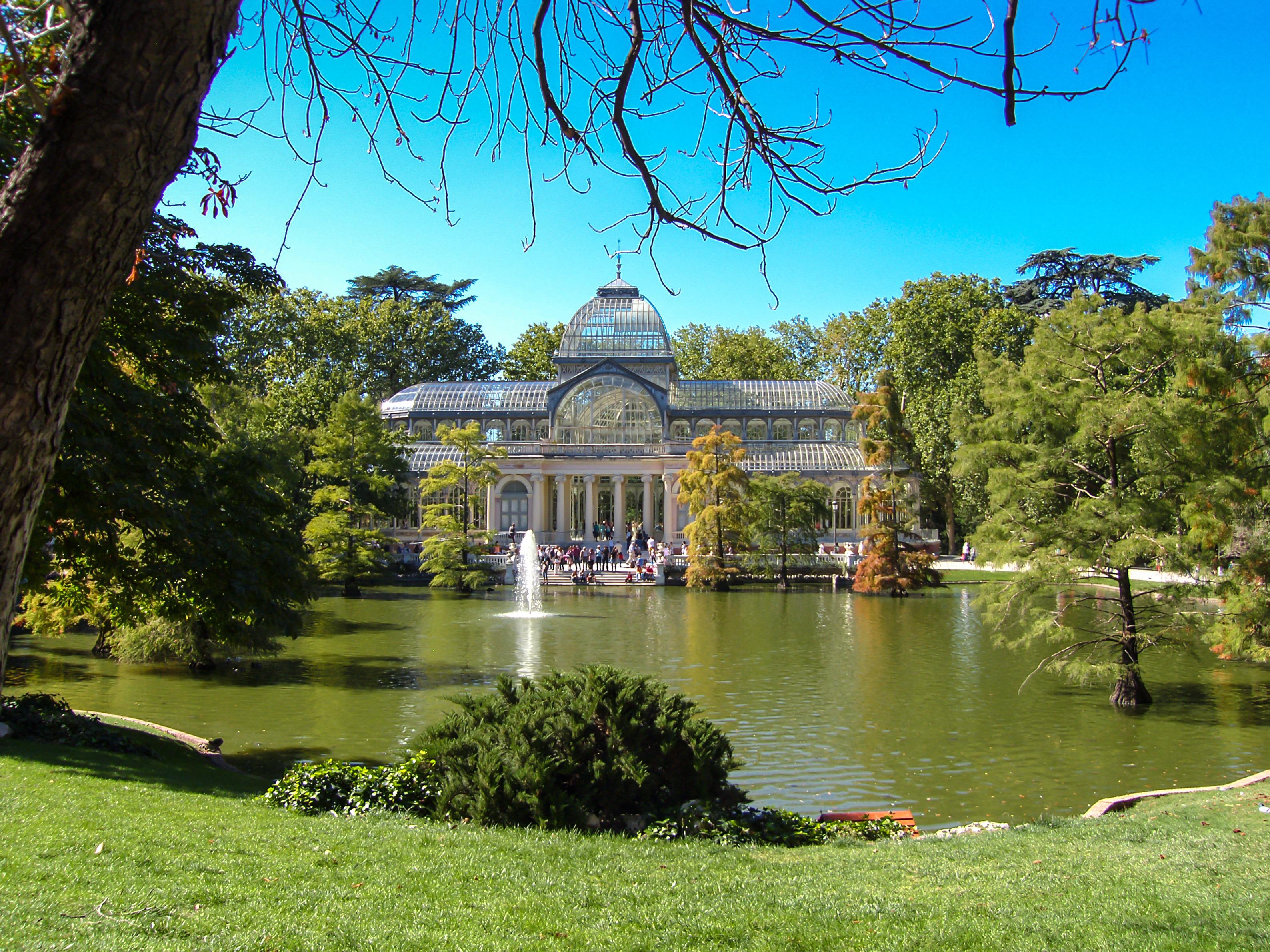
Madrid: Parque el Retiro Walking Lecture
MADRID: HISTORIC CENTER
Madrid: Historic Center Walking Lecture
MADRID: PRADO AND REINA SOFIA
Madrid: Prado and Reina Sofia
REFERENCES AND FURTHER READING
“History of Spain.” La Moncloa. https://www.lamoncloa.gob.es/lang/en/espana/historyandculture/history/Paginas/index.aspx
Turismo Madrid: Official Website
https://www.esmadrid.com/en
Besas, Mark & Peter. Hidden Madrid: A Walking Guide.Madrid. Ediciones La Libreria. 2007.
Ham, Anthony; Quintero, Josephine. Lonely Planet Madrid (Travel Guide). Lonely Planet Global Limited, 2021.
Phillips, Jr, William D.; Rahn Phillips, Carla. A Concise History of Spain (Cambridge Concise Histories). Cambridge University Press, 2017.
Shields, Graham. Madrid (World Bibliographical Series). ABC-CLIO, 1996.
Steves, Rick. Rick Steves Spain (Travel Guide). Avalon Travel, 2016.
EDITOR AND LAST UPDATE
John William Bailly 11 June 2023
COPYRIGHT © ALL RIGHTS RESERVED
 Bailly Lectures