“The king had wanted a monument that would glorify God, train the disciples in his teachings, offer a spiritual refuge, and house the remains of his forebears – especially his father – and successors.” Mary Crawford
DESCRIPTION
“Built at the end of the 16th century on a plan in the form of a grill, the instrument of the martyrdom of San Lorenzo, the Escorial Monastery stands in an exceptionally beautiful site in Castile. Its austere architecture, a break with previous styles, had a considerable influence on Spanish architecture for more than half a century. It was the retreat of a mystic king and became, in the last years of Felipe II’s reign, the centre of the greatest political power of the time.”
https://whc.unesco.org/en/list/318
DESCRIPTION FROM THE EL ESCORIAL OFFICIAL WEBSITE
Visiting the Monastery of San Lorenzo de El Escorial is the best way to travel through the history of Spain and particularly the reign of Felipe II. With an area of 33,327 square metres, it is located on the southern face of Mount Abantos at an altitude of 1028 metres in the Guadarrama mountain range, which gives it considerable scenic value. The Royal Monastery of San Lorenzo de El Escorial has been on the World Heritage list since 2 November 1984.
The Monastery of San Lorenzo de El Escorial is the monument that best sums up the ideological and cultural aspirations of the Spanish “Golden Age”, expressed here through an original synthesis of Italian and Flemish artistic forms at the behest of Felipe II.
Grouping together several functions in one building, San Lorenzo el Real was created as a monastery for the monks of the order of St. Jerome, whose church served as a pantheon for Emperor Charles V and his wife, Isabella of Portugal, as well as his son Felipe II and their relatives and successors, and where the friars prayed continuously for the salvation of the royal family. It also has a palace to house the king, as patron of the foundation, and his entourage. The college and seminary complete the religious aspect of the Monastery, and the Library was established for these three centres. This layout is, to an extent, still in place today. The figure of Charles V is decisive in the founding of this Royal Site because of how much he influenced his son’s beliefs by spending his last years amongst the Hieronymite monks of Yuste and because of the need to give him a worthy burial.
Once he had decided to found the monastery, Felipe II began to look for a location in 1558 and the decision was made at the end of 1562, with work beginning according to the design or “universal drawing” of Juan Bautista de Toledo. In 1571, the convent part was already more or less finished; the “king’s house” was started in 1572 and the Basilica in 1574, finished in 1586 and consecrated in 1595, the date that can be considered the end of the Work, although the last stone had been placed in 1584 and the decorative work took several more years. The king carefully supervised all the construction work.
The Monastery was isolated in the middle of the countryside, with only a few service buildings for the palace and the monastery: the two buildings for religious services and the entourage. But Carlos III ordered the creation of a small elegant town to be planned by the architect Juan de Villanueva, who was able to adapt his Italian classicist training to the nationalist spirit that El Escorial came to represent for the culture of the Spanish Enlightenment. His works notably include the Casa de Infantes and the Ministro de Estado.
https://www.patrimonionacional.es/en/visita/royal-site-san-lorenzo-de-el-escorial
List of Historic Humans of España relevant to España: Ida y Vuelta
EL ESCORIAL LECTURE NOTES
“Located near Madrid, San Lorenzo de El Escorial is an imposing architectural complex that is arguably the most ambitious monument constructed during the Renaissance in Spain. Construction started in 1563 after King Felipe II of Spain decided to commission a funerary monument for his father, the Holy Roman Emperor, Charles V. But Felipe II desired an even more complicated structure that would also function as a palace and monastery. By the time construction ended in 1584, the complex included not only these, but a church and college as well. A library was also added in 1592. The project was so complex that it took more than a decade to complete, and approximately a thousand people worked on it during its peak construction period.” https://www.khanacademy.org/humanities/renaissance-reformation/xa6688040:spain-portugal-15th-16th-century/xa6688040:16th-century-spain/a/el-escorial-spain
The architectural layout and recurring symbol throughout El Escorial is the grill upon which San Lorenzo was cooked alive.
El Escorial is a Renaissance structure built in the context of the Counter-Reformation under the direction of Felipe II. Felipe II wanted to be perceived as the leader of the Catholic world, converting indigenous people in the Americas, fighting Muslims in the Mediterranean, and,most importantly, expelling Protestants in Northern Europe. Above all else, the Palace/Monastery/School of El Escorial is an expression of a political will.
Kings of the Habsburg and Bourbon line are buried in the Pantheon of El Escorial. Only queens that gave birth to kings are buried in Pantheon.
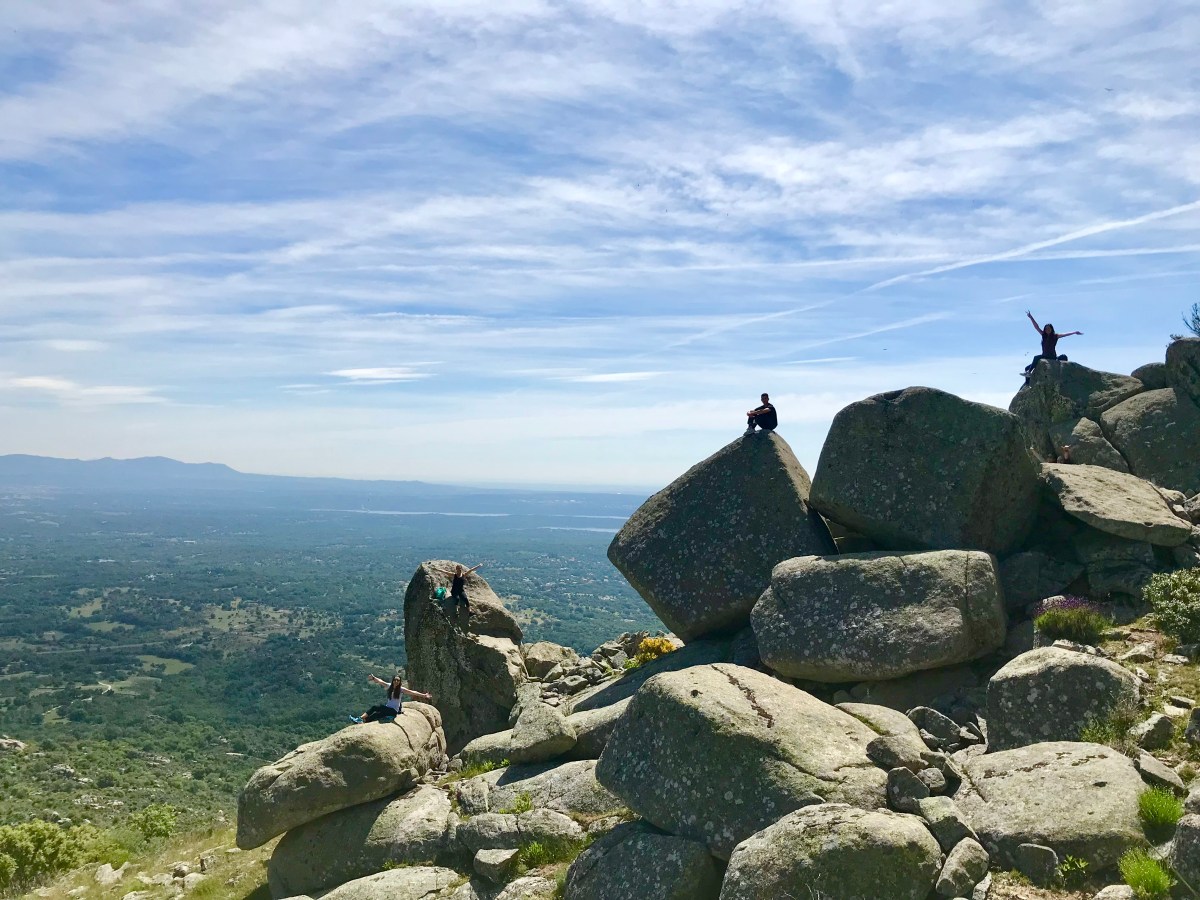
Felipe II had a seat (silla) carved into a boulder high above San Lorenzo de El Escorial so he could admire what he ordered to be built.
REFERENCES AND FURTHER READING
Ham, Anthony; Quintero, Josephine. Lonely Planet Madrid (Travel Guide). Lonely Planet Global Limited, 2021.
Phillips, Jr, William D.; Rahn Phillips, Carla. A Concise History of Spain (Cambridge Concise Histories). Cambridge University Press, 2017.
Shields, Graham. Madrid (World Bibliographical Series). ABC-CLIO, 1996.
Steves, Rick. Rick Steves Spain (Travel Guide). Avalon Travel, 2016.
EDITOR AND LAST UPDATE
John William Bailly 19 June 2022
COPYRIGHT © ALL RIGHTS RESERVED
 Bailly Lectures