THE COLLECTION
“The Wolfsonian–FIU uses objects to illustrate the persuasive power of art and design, to explore what it means to be modern, and to tell the story of social, political, and technological changes that have transformed our world. It encourages people to see the world in new ways and to learn from the past as they shape the present and influence the future.” The Wolfsonian
ACCESS
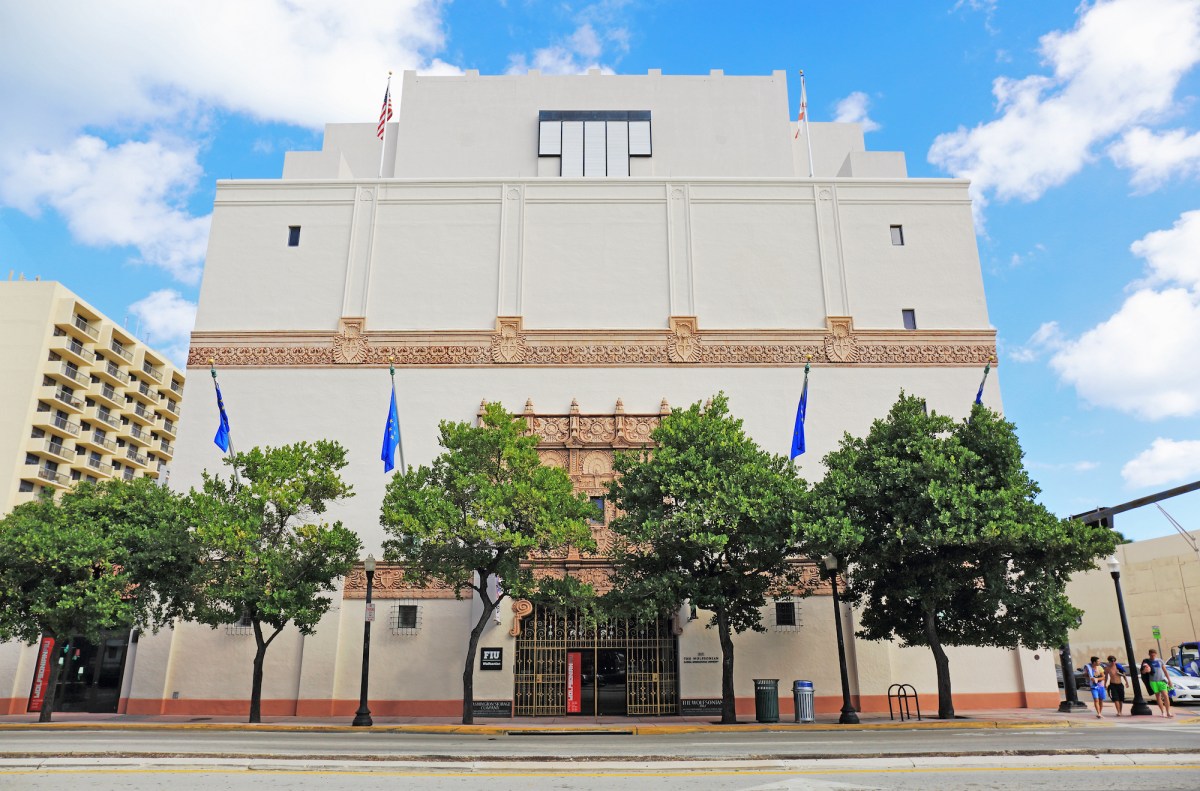
The Wolfsonian museum is located in a building that was “originally built in 1927 by Robertson & Patterson to house the Washington Storage Company.” The Wolfsonian
1001 Washington Avenue
Miami Beach, FL 33139
305.531.1001
https://wolfsonian.org/visit/
Admission to the Wolfsonian is free of FIU students!
MISSION
“The Wolfsonian–FIU uses objects to illustrate the persuasive power of art and design, to explore what it means to be modern, and to tell the story of social, political, and technological changes that have transformed our world. It encourages people to see the world in new ways and to learn from the past as they shape the present and influence the future.” The Wolfsonian
HISTORY
The Wolfsonian was founded by Mitchell “Micky” Wolfson, Jr. (b. 1939, Miami).
“A single hotel room key launched what is now one of the largest American university art collections—a cultural cornerstone of Miami since 1995, a jewel of Florida International University since 1997, and an iconic landmark of South Beach’s historic Art Deco district. The unique collection that began with Micky Wolfson today reflects the collecting habits of many, reaching thousands of students, scholars, and lovers of art and design every year…With more than 200,000 objects, our collection contains a vast universe of ideas: household appliances that sped the pace of work; designs that bridged cultures; architectural plans fueled by ambition; and propaganda that helped turn the tides of war. Our core focus is material from Europe and the United States, extending to regions of Latin America, Asia, and Africa.” The Wolfsonian

THE WOLFSONIAN BUILDING
“The Wolfsonian-Florida International University is housed in the former Washington Storage Company, a 1927 Mediterranean Revival building designed by Robertson & Patterson. Originally, the “stormproof, fireproof, and burglarproof” warehouse held the valuables of wealthy clients wintering in South Florida, with vaults for paintings, rugs, furniture, silver, and more, plus a freight elevator—the oldest still operating in Miami-that allowed for larger items such as cars and pianos. In keeping with its history, 1001 Washington Avenue later transformed into a museum dedicated to the care, preservation, and display of art and design objects. Under the stewardship of founder Micky Wolfson, The Wolfsonian opened its doors on November 11, 1995, after an extensive remodeling by Mark Hampton. Today the facility combines the integrity and grace of its landmark architecture with the modern features necessary for a state-of-the-art center for learning.” The Wolfsonian
THE WOLFSONIAN LIBRARY
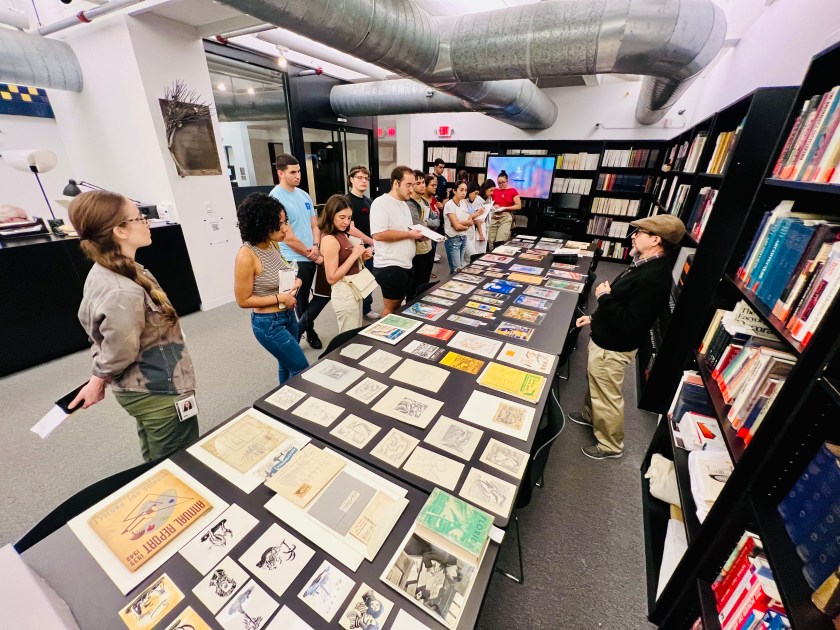
“The Wolfsonian Library accounts for more than half of the 200,000 works in the museum’s collection. It houses 125,000 rare books, periodicals, reference materials, special archives, and ephemeral items including: vintage postcards, advertisements, brochures, calendars, leaflets, labels, sheet music covers, schedules, matchbook covers, and more. The artifacts demonstrate the vital role that art, architecture, and design have played in shaping perceptions of the modern world, and are preserved to reflect the times in which they were created.” The Wolfsonian
SELECTED WORKS FROM THE PERMANENT COLLECTION
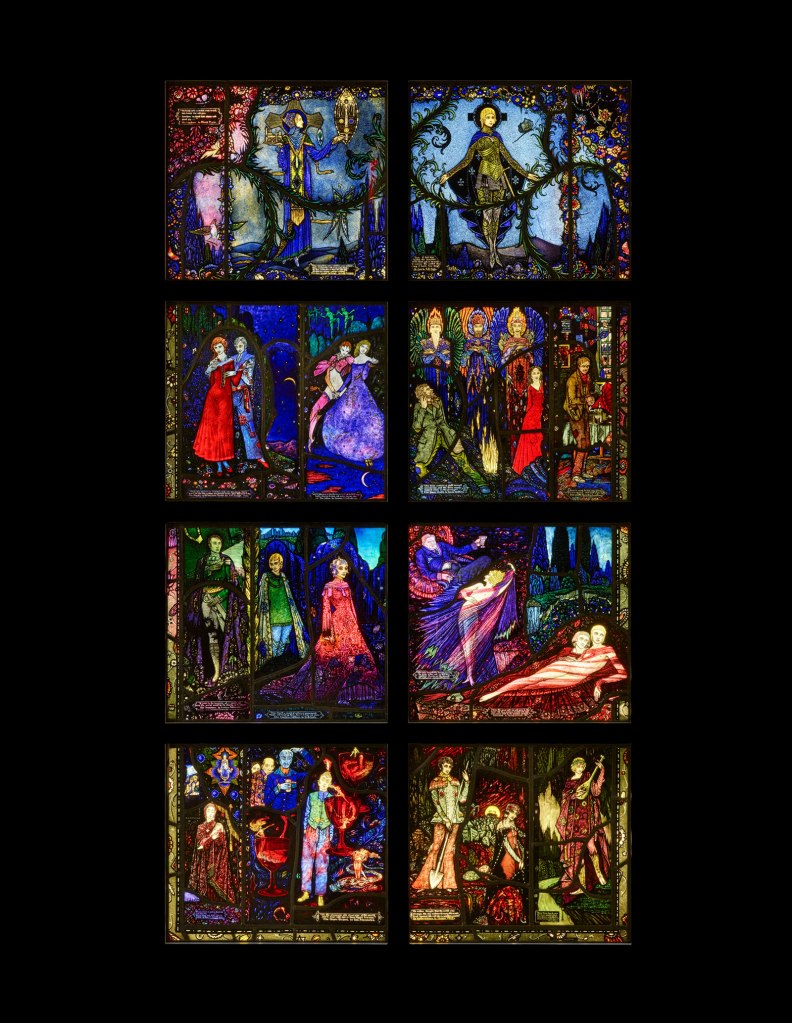
CLARKE. GENEVA WINDOW, 1926.
“Widely regarded as his most important and controversial commission, Harry Clarke’s stained-glass masterpiece, the Geneva Window, is again on view at The Wolfsonian–FIU. An internationally renowned Irish artist, Clarke was commissioned in 1926 by the newly independent Irish Free State to create a window as a gift to the League of Nations in Geneva. The completed window was, however, rejected—labeled too provocative and “unrepresentative” of the Irish people. This new installation sheds light on the life and times of Harry Clarke, the stories behind the window, and the consequences of cultural censorship.” The Wolfsonian
See details and read more about Harry Clarke’s Geneva Window on Google Art & Culture
https://g.co/arts/2FXfKvGVSKRoYm5y5

CARROLL AND LEE. NORRIS THEATRE WINDOW GRILLE, 1929.
“Conceived as part of an imposing three-story entrance to the Norris Theatre in Norristown, Pennsylvania, the window grille is an example of the stylized, decorative treatment that embellished the facades of North American theaters throughout the 1920s and ’30s. Composed of more than 100 glazed terra cotta tiles, the rigid geometry of the layout recalls the “frozen fountain” motif that appears frequently in Art Deco architecture and applied art. Such architectural decoration was popularized by the 1925 Paris Exposition Internationale des Arts Décoratifs et Industriels Modernes. Designed in 1929 by Philadelphia architects William Harold Lee and Armand Carroll, the Norris Theatre was praised upon its opening in 1931 for being ‘ultra-modern in equipment and decoration.'” The Wolfsonian
The Norris Theatre was demolished in 1983 to make way for a McDonald’s.
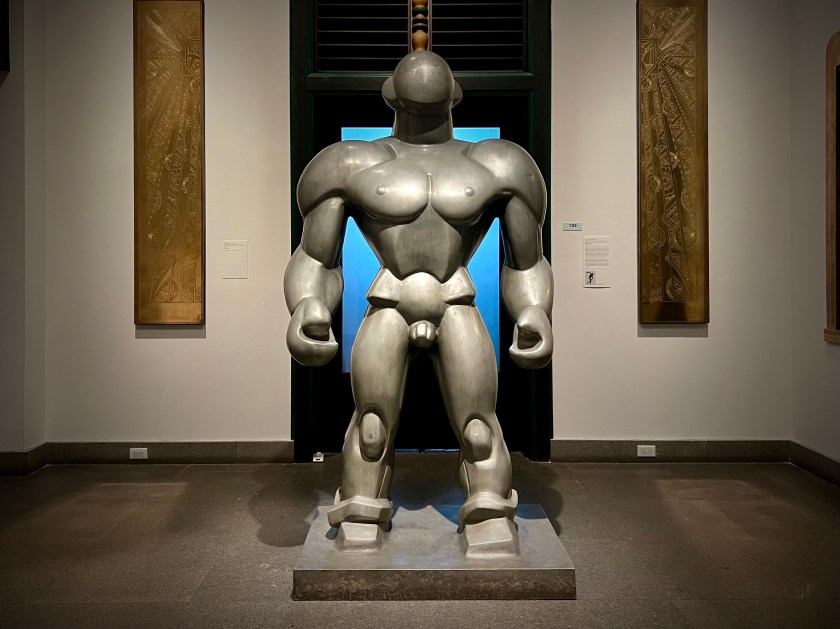
TALCOTT. WRESTLER, 1929.
“The Wrestler was cast in 1929 and shown at the Museum of Modern Art in the 1930-31 exhibition Paintings and Sculpture by Living Americans. Dudley Vaill Talcott was invited to submit his sculpture to an art competition and exhibition on the theme of athletic achievement at the 1932 Olympic Games in Los Angeles, which included similar competitions in architecture, literature, painting, and music. The Wrestler was one of seven sculptures to receive an honorable mention from the judges. Talcott’s sculpture is part of a lineage of sculptural representation of athletes that goes back to Myron of Eleutherae’s Discobolus (Discus Thrower) from the fifth century BCE and brings it into the modern streamlined era. Arts competitions were part of the ancient Olympics and, then, reintroduced in the modern games from 1912 until 1948.” The Wolfsonian
REFERENCES AND FURTHER READING
Google Arts & Culture
The Metropolitan Museum of Art
The Wolfsonian

EDITORS AND LAST UPDATE
John William Bailly 12 April 2023
COPYRIGHT © ALL RIGHTS RESERVED
 Bailly Lectures