Barcelona, “archivo de la cortesía, albergue de los extranjeros, hospital de los pobres, patria de los valientes, venganza de los ofendidos y correspondencia grata de firmes amistades, y en sitio y en belleza única.”
Barcelona, “archives of courtesy, shelter of the foreigners, hospital of the poor, fatherland of the brave, the vengeance of the offended and pleasant correspondence of firm friendship, and in site, and in beauty, unique.”
Miguel de Cervantes Saavedra
DESCRIPTION
Capital of Spain from 1937 to 1939, Barcelona is the second most populous city in Spain. It is still up to this day capital of Catalonia. Barcelona is home of 9 UNESCO World Heritage Sites: Parc Güell, Palau Güell, Casa Milà (aka La Pedrera), Casa Vicens , La Sagrada Familia, Casa Batlló, the Cryst of the Church at Colonia Güell -these 7 were Gaudi’s makings, the Palau de la Música Catalana and the Hospital de Sant Pau – designed by architect Lluis Domenech i Montaner.
HISTORY
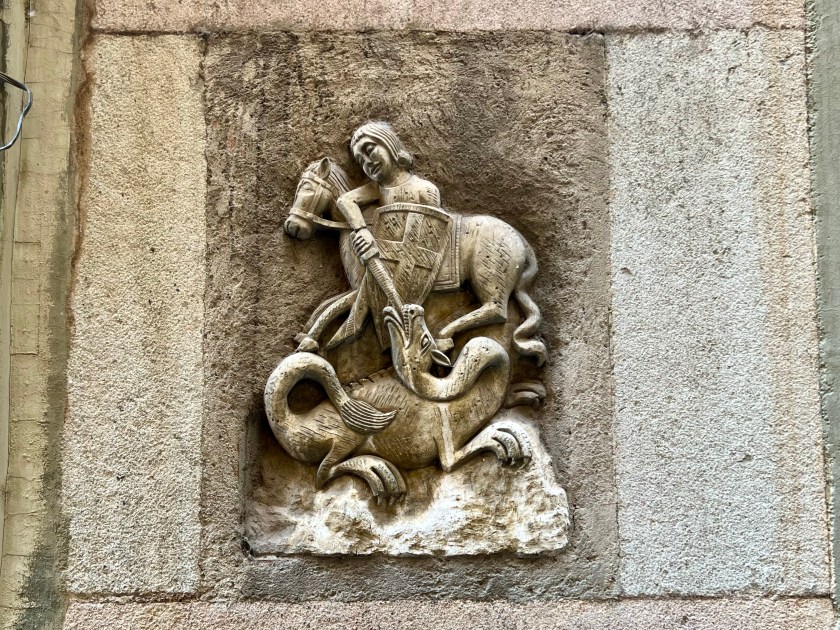
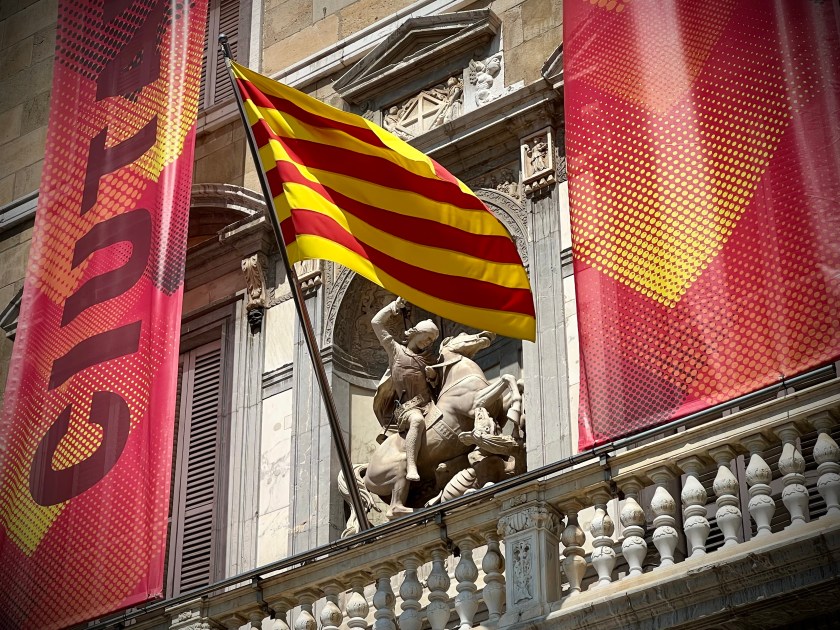
The patron Saint of Barcelona is San Jordi (Saint George). Images of Jordi slaying a dragon are seen throughout the city. San Jordi is recognizable due to the cross on his shield.
Barcelona first becomes a documented settlement at the time that Carthage rules España. Barcelona was founded in approximately 240 BCE by the Carthaginian General named Hamilcar Barca, father to Hannibal.
After Rome defeated Carthage, Romans renamed the city Barcino in 15 BCE and greatly developed it around the year 50 CE.
“The Romans who set up a colony called Barcino at the end of the 1st century BC. The colony had some thousand inhabitants and was bounded by a defensive wall, the remains of which can still be seen in the old town.” www.barcelonaturisme.com
When the Roman Empire collapsed, Barcelona became Visigoth in the early 400s. In 735, however, Muslims conquered Barcelona. As Barcelona is close to the Pyrennes mountains, conflicts between Christians and Muslims occured regularly. Victory eventually goes to the Catalans thanks to figures such as Wilfred the Hairy. Wilfred eventually dies in 897 fighting Muslims, but not before two legends arise from his feats.
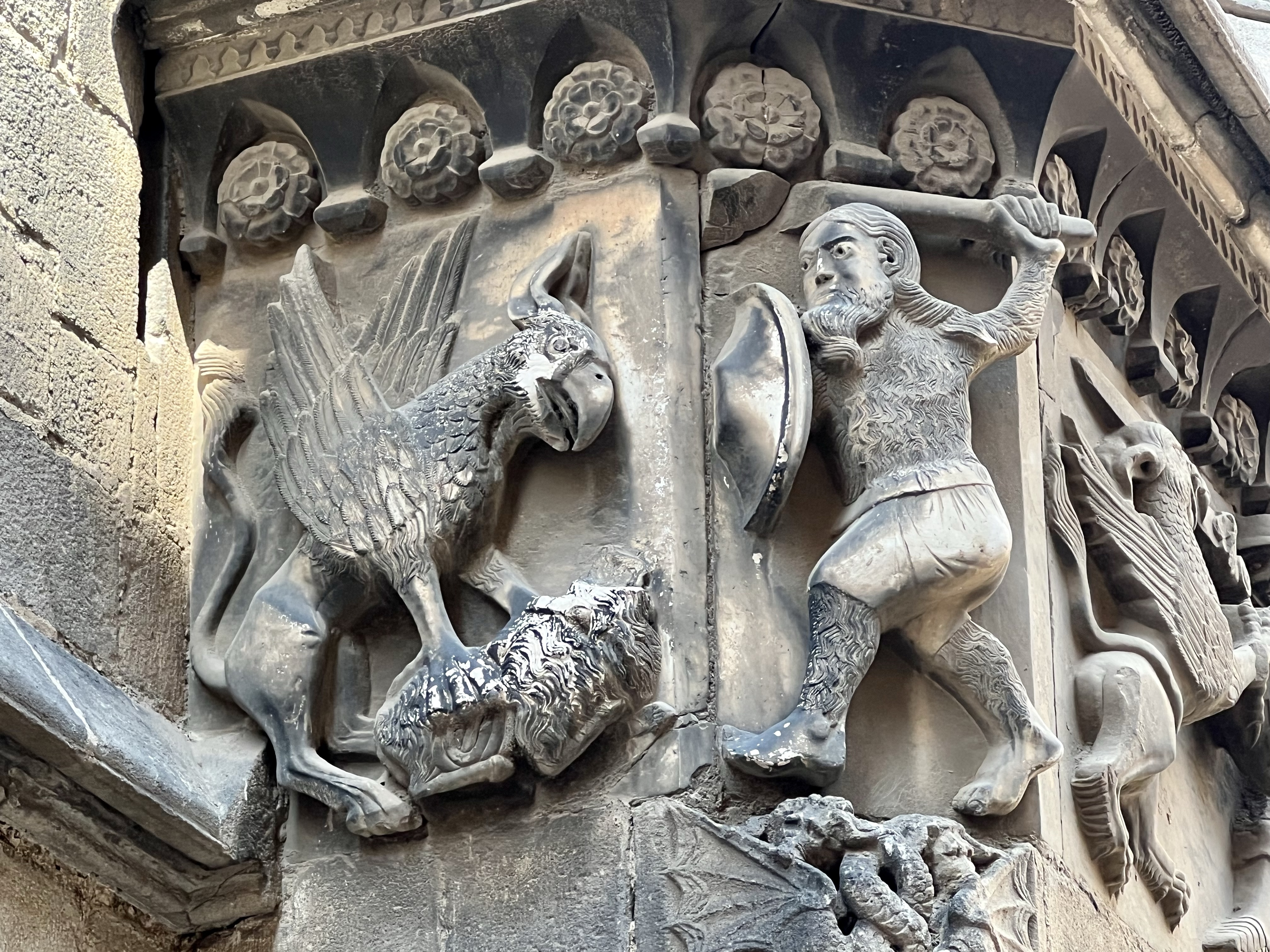
“The story goes that Guifré (Wilfred the Hairy), fighting for Louis the Pious (son of Charlemagne) in his siege of Barcelona, was badly wounded by the Saracens. As he lay in his tent after the victory, the king came to visit him and noticed Guifré’s shield, covered in gold leaf but without a blazon. What device could the king give his warrior? Louis dipped his fingers in Guifré’s blood and dragged them down the shield.” Hughes, Robert. Barcelona . Knopf Doubleday Publishing Group
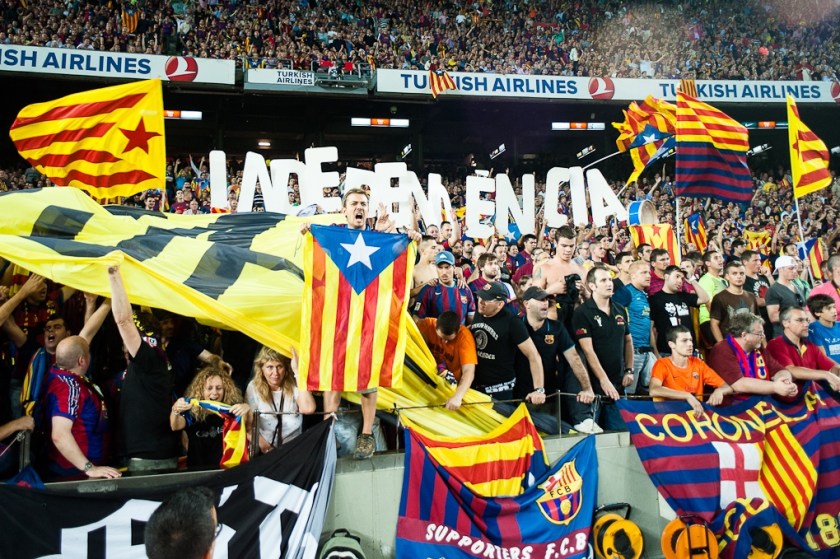
The legend of the origin of the Catalan flag and Barcelona FC jersey were born. Barcelona FC is the futbol team of Barcelona and is integrally tied to Catalan identity. During the reign of Franco, while the language was banned, the stadium of Barcelona, Camp Nou, was one of the only places Catalan could be heard. The supporters sang chants in Catalan.
There are two main eras of prosperity in Barcelona. Barcelona plays a crucial role in Mediterranean trade in the Gothic era and Barcelona sees an industrial and cultural rebirth with the advent of Modernisme in the late 19th century.
The nineteenth century, however, sees one of the darkest moments in Catalonian history, as examined in the documentary Negrers: La Catalunya Esclavista (Slavers: Catalonia and the Slave Trade).
“It shines a light on what historians have been demonstrating for decades: that between 1817 and 1867, Catalans were directly or indirectly involved in the transportation of 700,000 slaves from west Africa to the Caribbean and that the trade financed much of the industrialisation of Catalonia and the 19th-century building boom in Barcelona. Although Spain soon followed Britain in abolishing slavery – in word if not in deed – it turned a blind eye when the clandestine trade continued, much of it on ships owned and crewed by Catalans. By then, independence movements in the Americas had reduced the Spanish empire to little more than Cuba and Puerto Rico, where the demand for sugar led to the spread of plantations and the need for labour – slave labour. At the same time, Catalonia needed capital to industrialise, capital that was often invested in the hugely profitable slave trade.” https://www.theguardian.com/world/2023/mar/13/catalonia-confronts-past-racism-after-slave-trade-documentary
In the twentieth century, Barcelona is marked by its allegiance to the Republican cause in the Spanish Civil War and its eventual bombing and defeat. Barcelona then sees a revival of Catalan identity and economic prosperity after the death of Franco.
BARCELONA LECTURES NOTES
BASILICA DE LA SAGRADA FAMILIA

Antoni Gaudi was a devout Catholic dedicated to Catalan identity. Gaudi’s Sagrada Familia is a singular building, if that no other structure combines industrial and naturalistic elements in such a unique manner, as well as Gothic and Islamic components. Although human made, the interior resembles a forest. Architecturally, it appears the Gothic cathedral of Toledo merged with the domes of the Alhambra.
Link to the official History webpage of the Sagarda Familia https://sagradafamilia.org/en/history-of-the-temple
CATEDRAL DE BARCELONA
ELS QUATRE GATS
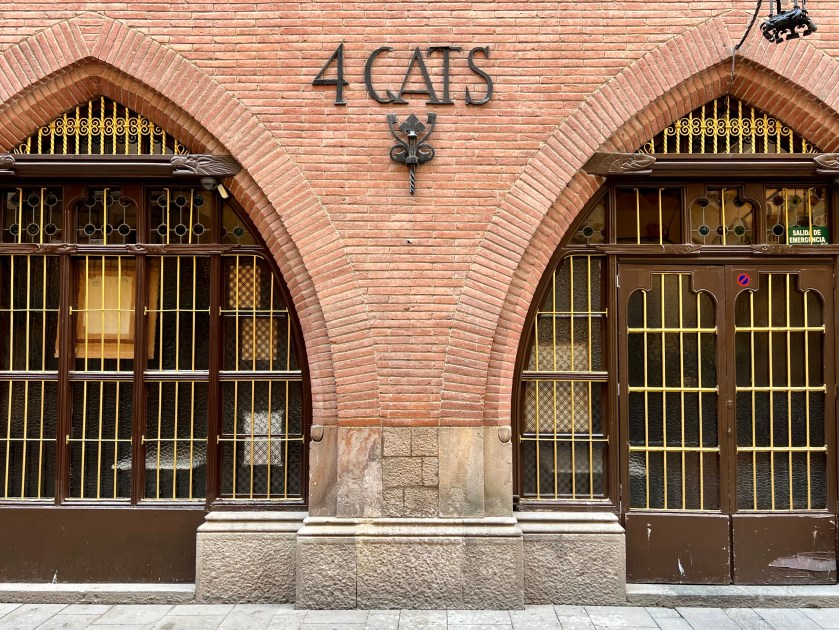
“With such high jinks and the publicity they created, modernisme in Barcelona had the momentum of a popular fashion by 1896, and Casas and Rusinyol decided to give it a base in town. In 1897 they and Romeu rented the ground floor of a Neo-Gothic house just built by Puig i Cadafalch, the Casa Martí, and in it they proposed to put a cerveseria, or “beer hall.” They called it Els Quatre Gats—The Four Cats. In hindsight, The Four Cats has acquired a nostalgic aura as one of the great intellectual meeting places of fin de siècle Europe. This, like all such reputations, is exaggerated, but the place certainly played a role in Barcelona’s artistic life during its six short years (1897–1903). This was due not to the food, which was mediocre and often stingy (according to Josep Pla, not servings but “an exhibition of painted plates”), but rather to the drawing power of its core clientele. The name of the place meant, in Catalan slang, “just a few people”; the “four cats” were Romeu, Casas, Utrillo, and Rusinyol. The place, Rusinyol wrote, would be something for everyone—“an inn for the disillusioned … a warm nook for the homesick … a Gothic beer-hall for lovers of the north, and an Andalusian patio for lovers of the South … a place to cure the ills of our century.” Casas, Rusinyol, Utrillo, and their friends created their own club and, in the tradition of French artists’ estaminets with rude proprietors, got an oddity to run it.” Robert Hughes
ESGLÉSIA DE SANTA ANNA
FUTBOL CLUB BARCELONA
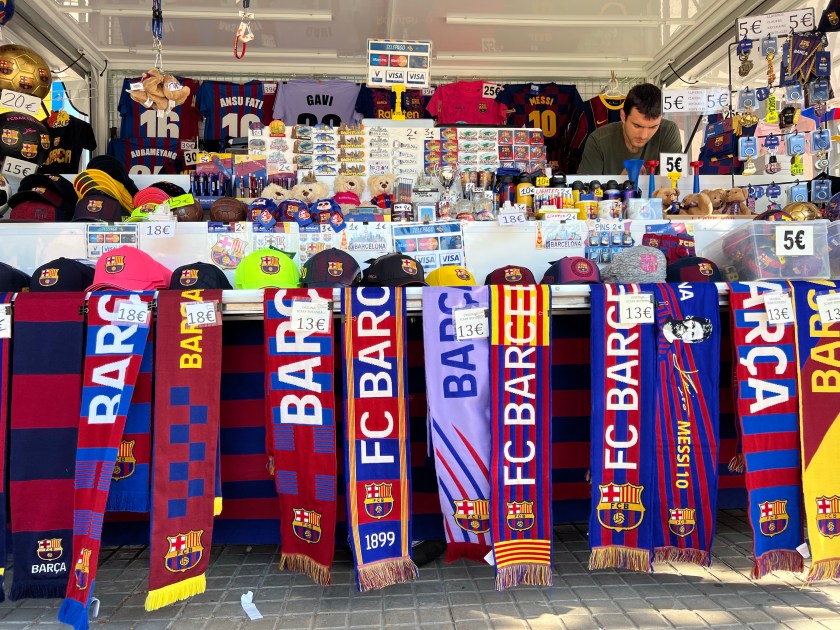
The futbol (soccer) team Futbol Club Barcelona is deeply tied to Catalan identity. Their famous jerseys are characterized by the the streaks of blood from the story of Louis the Pious and Wilfred the Hairy. In the era of Franco, Barcelona’s Nou Camp stadium was the only place one could hear the outlawed Catalan language. FC Barcelona have repeatedly been crowned champions of Europe. Their most accomplished player was Lionel Messi.
LA RAMBLA
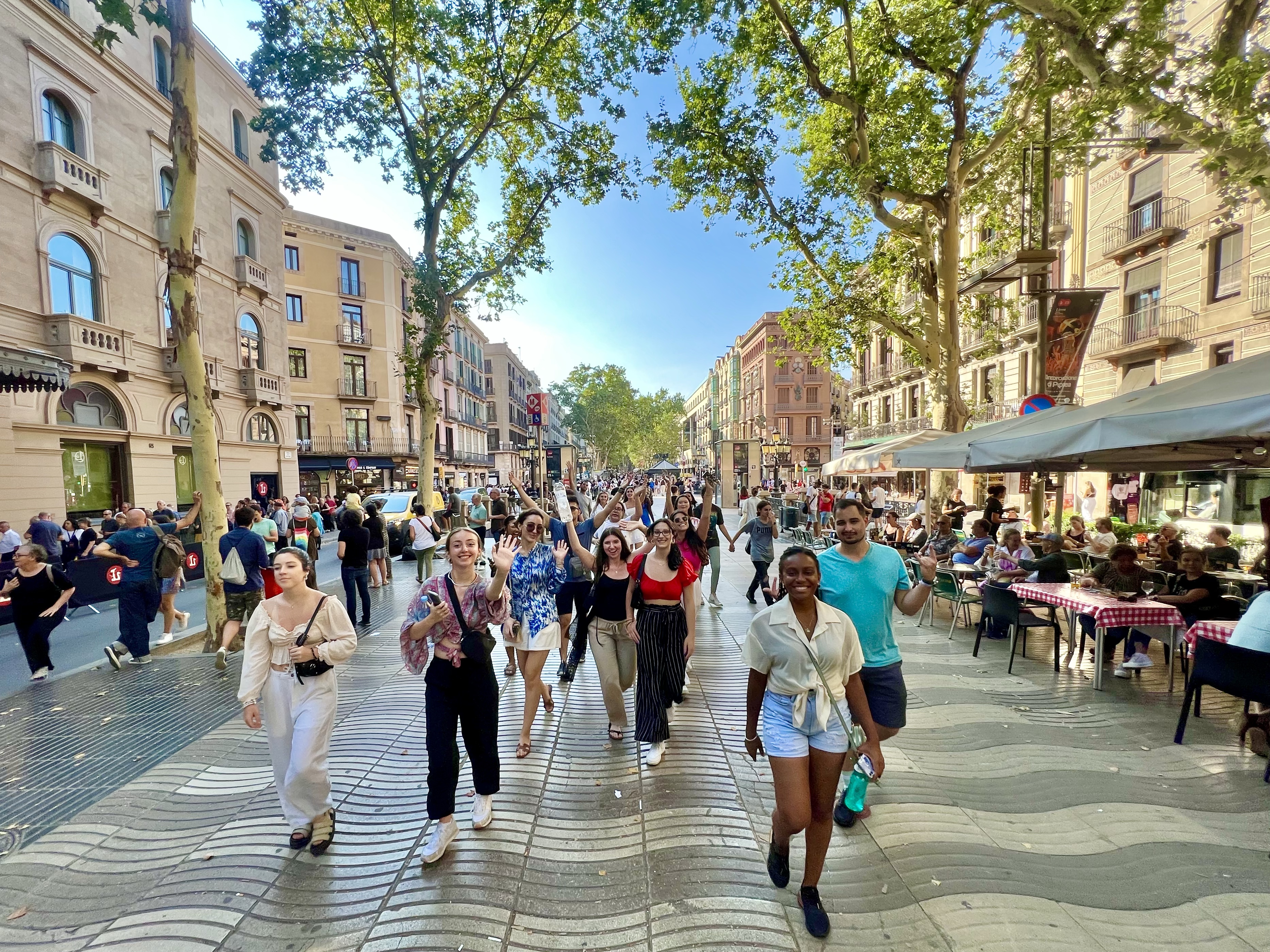
“The word “Rambla” comes from the Arabic word “Ramla”, meaning “sandy river bed”. When it rained, water flowed down from the mountains and ran along the river bed. After the hospital had been built, the river bed was turned into a street known as La Rambla; it was Barcelona’s first and only major wide boulevard. At the time, Barcelona only had narrow streets that kept the houses cool during the summer months. This made La Rambla the best street in Barcelona for taking a walk. It also gave the well-to-do the chance to show off their wealth, as their exclusive attire and jewellery didn’t catch anyone’s attention in the dark, narrow streets. The word “Rambla” was even turned into an expression “ramblear” which means “to people-watch”. You can still “ramblear” on Barcelona’s Rambla. So don’t miss the opportunity to do so.” https://www.barcelonaturisme.com/wv3/en/enjoy/5/historic-streets.html
“On La Rambla you can ramblejar, in other words, you can wander up and down time and again on Barcelona’s great boulevard, for nothing more than the pleasure it gives you, because it makes you feel at home…When, in the 19th century, Barcelona broke free of its suffocating walls, it built a great promenade to join the upper part of the city, the mountain side, with Ciutat Vella, the sea side. La Rambla consists of five stretches with different names. Beginning in Plaça de Catalunya and heading down La Rambla, towards the port, is La Rambla de Canaletes, where you find the Font de Canaletes, a 19th century fountain. If you drink from it, they say you are sure to return to Barcelona. A little further down is La Rambla dels Estudis, so called because one of the city’s first universities was located here. It closed in the 18th century when Philip V abolished the Catalan universities. In this area you can also find Palau de la Virreina, a fine example of civil architecture and a great gift of love from the Viceroy of Peru to his second wife. Continuing towards the sea, you come to La Rambla de les Flors, the only place in 19th century Barcelona you could buy flowers, and which keeps the trade alive today. La Boqueria and the Liceu, one a temple to food and the other to music, begin the fourth Rambla, La Rambla dels Caputxins, so called because of the Capuchin monastery that used to be there. The fifth part, La Rambla de Santa Mónica, where traditionally the artists and painters are located, links this spectacular boulevard with the sea.” https://www.meet.barcelona/en/visit-and-love-it/points-interest-city/la-rambla-99400356278
MERCAT DE LA BOQUERIA
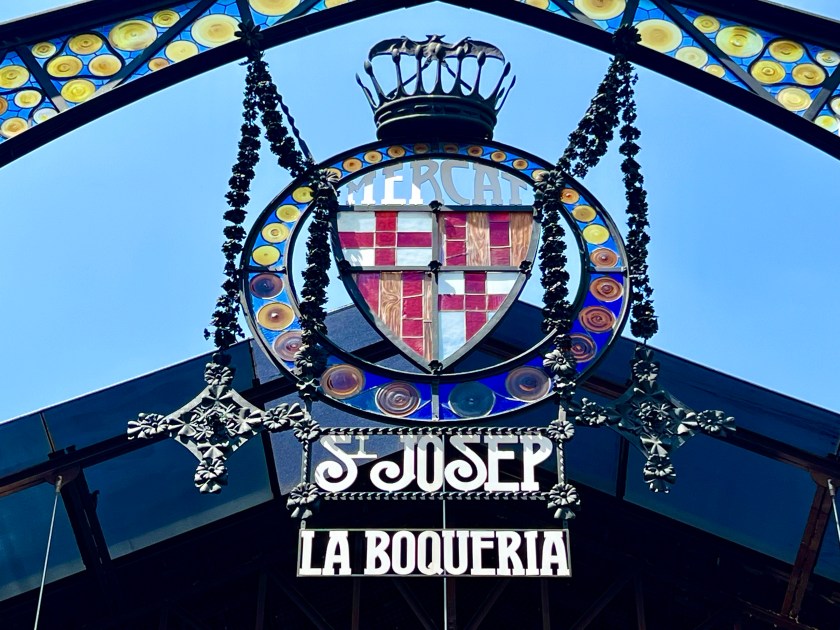
“As the city grew and the Rambla became more important as a thoroughfare, the itinerant stalls gradually moved backwards and towards the west until they arrived at the foot of the Convent of Sant Josep (which has since disappeared and is the origin of the market’s name). Groups of rioters set fire to it in 1835, on St James’ Night, which became known for the Burning of the Convents. The land it had stood on then became the property of the City Council. There the square with the porch was built that can still be seen today, and the market was finally moved indoors, even though today’s building still did not exist. The municipal architect Josep Mas was given the job of designing a tall, modern building made with cast iron to house the stalls. The Boqueria was officially opened in 1840 and the roof was finished in 1916.” https://www.meet.barcelona/en/visit-and-love-it/points-interest-city/mercat-de-sant-josep-la-boqueria-92086009447
MIRADOR DE COLOM (COLUMBUS MONUMENT)
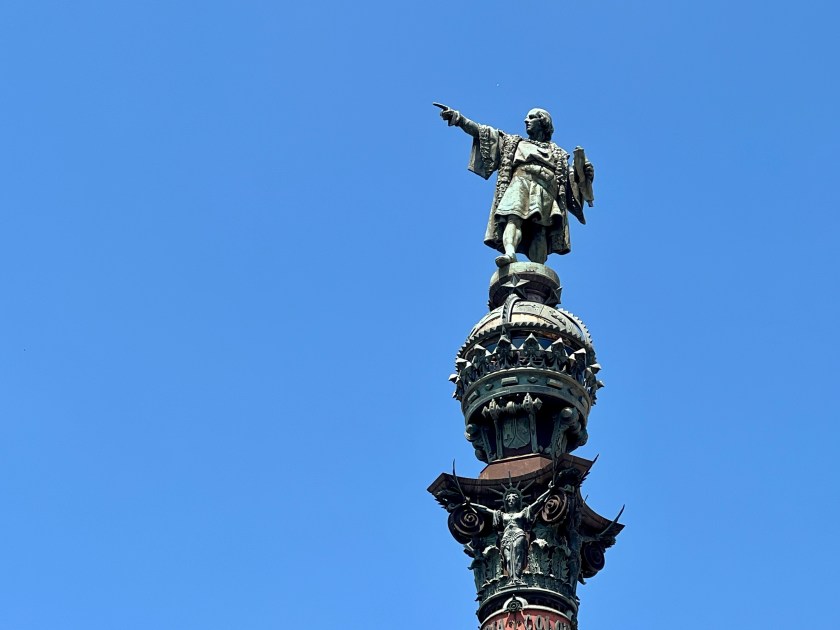
The Mirador de Colom (Columbus Monument) at the point where La Rambla meets the Mediterranean is both as imposing and problematic as one may expect. After his first voyage to the Western Hemisphere, Columbus met Ferdinand and Isabella in Barcelona. The moment when Columbus informs the Spanish Monarchs of the “New World” marks the first transformation of Europe after contact-the birth of a new global culture. The point also marks the beginning of the Transatlantic Slave Trade, the human, cultural, and economic effects of which are still felt today.
The monument lacks context, nuance, and reflection on the historical realities and consequences of 1492-1493.
NIT DE SANT JOAN/NIT DE FOC
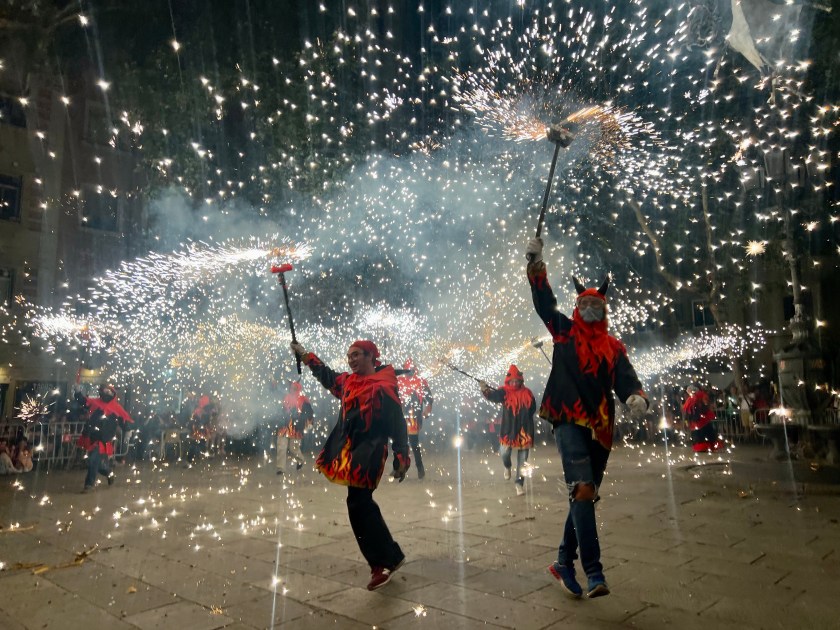
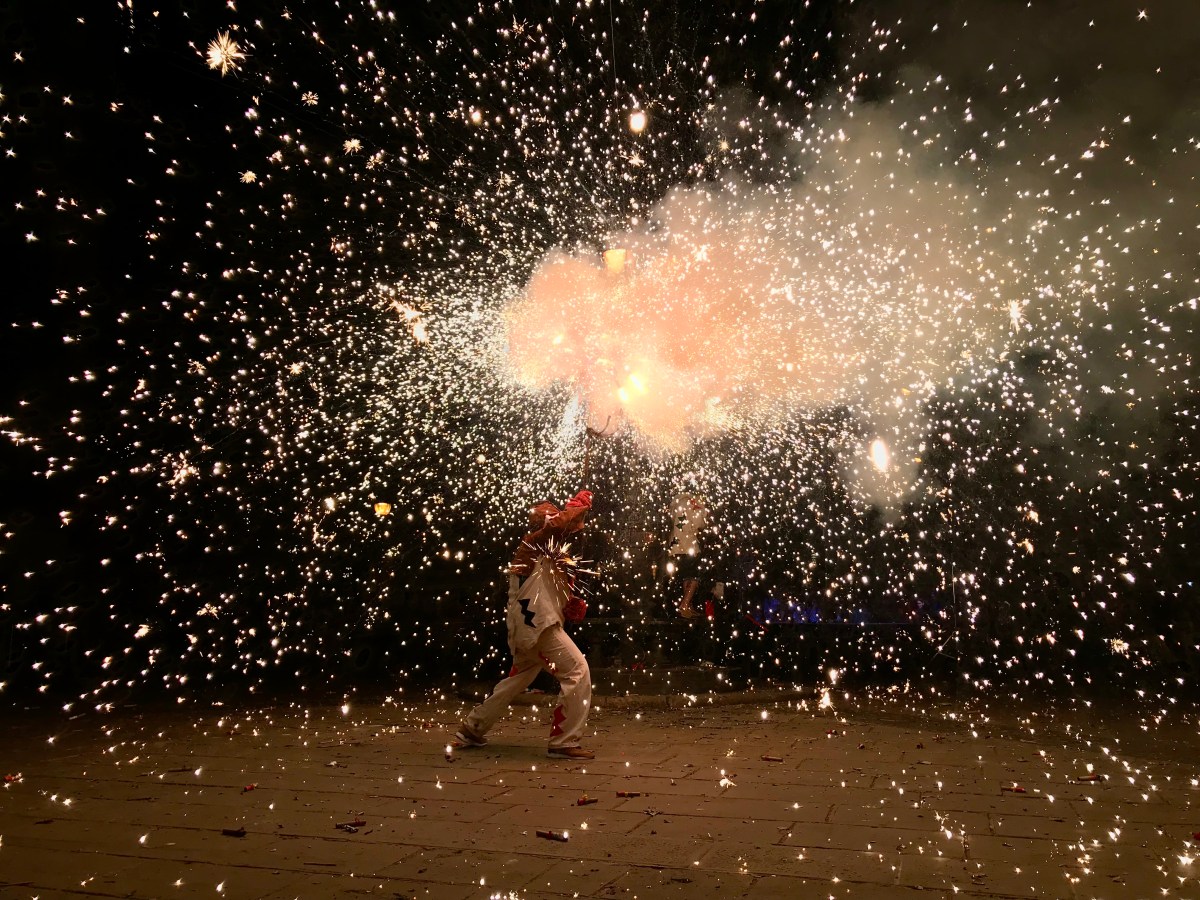
“When we say the ‘Nit de Sant Joan’ (St John’s Eve) is one of the city’s oldest festivals, we’re not saying it just for the sake of it: the basic elements – lighting bonfires, throwing firecrackers and filling the public space – have remained unchanged since the Middle Ages…Cazeneuve says that until the 18th century the popular night-time festival, a wild celebration with fires and fireworks, existed alongside the ceremonial one organised by the authorities during the day. Then, following the defeat of 1714, bans were introduced to stop people celebrating the revetlla, lighting bonfires and setting off firecrackers. Despite that, the people of Barcelona kept the tradition alive. By the end of the 19th century all the elements were in place that make up the festival we know today and continue to celebrate on the city’s streets and square…Sant Joan is the oldest popular festival in the city. While there are other celebrations, such as Christmas, that precede it, they don’t have the public character that Sant Joan does, because they are celebrated in private, rather than out on the streets. To show how, essentially, it has remained unchanged for over 500 years, the book explains how bonfires, firecrackers, sea bathing and outdoor revelry were the festival’s main features even in the 15th century.” https://www.barcelona.cat/culturapopular/en/noticia/infobarcelonaenthe-nit-de-sant-joan-a-festival-unchanged-in-over-500-years-2_361886
“Diables and balls de diables , devil dances, form part of the so-called balls parlats. According to Joan Amades, the first recorded date of one of these “spoken dances” is 1150, when it was performed as an entremés, a humorous interlude at the wedding banquet of Berenguer IV and Peronella of Aragon…It was only when democracy arrived and the streets were reclaimed as a festival space that new colles de diables appeared in Barcelona. These devil groups, in contrast to the historical ones that had survived, have moved away from the traditional evolution, under the influence of the correfoc that arose almost spontaneously in Barcelona as a game between the devil, the devil’s fire and the public.” https://www.barcelona.cat/culturapopular/en/festivals/fire/diables
PALAU DE LA MUSICA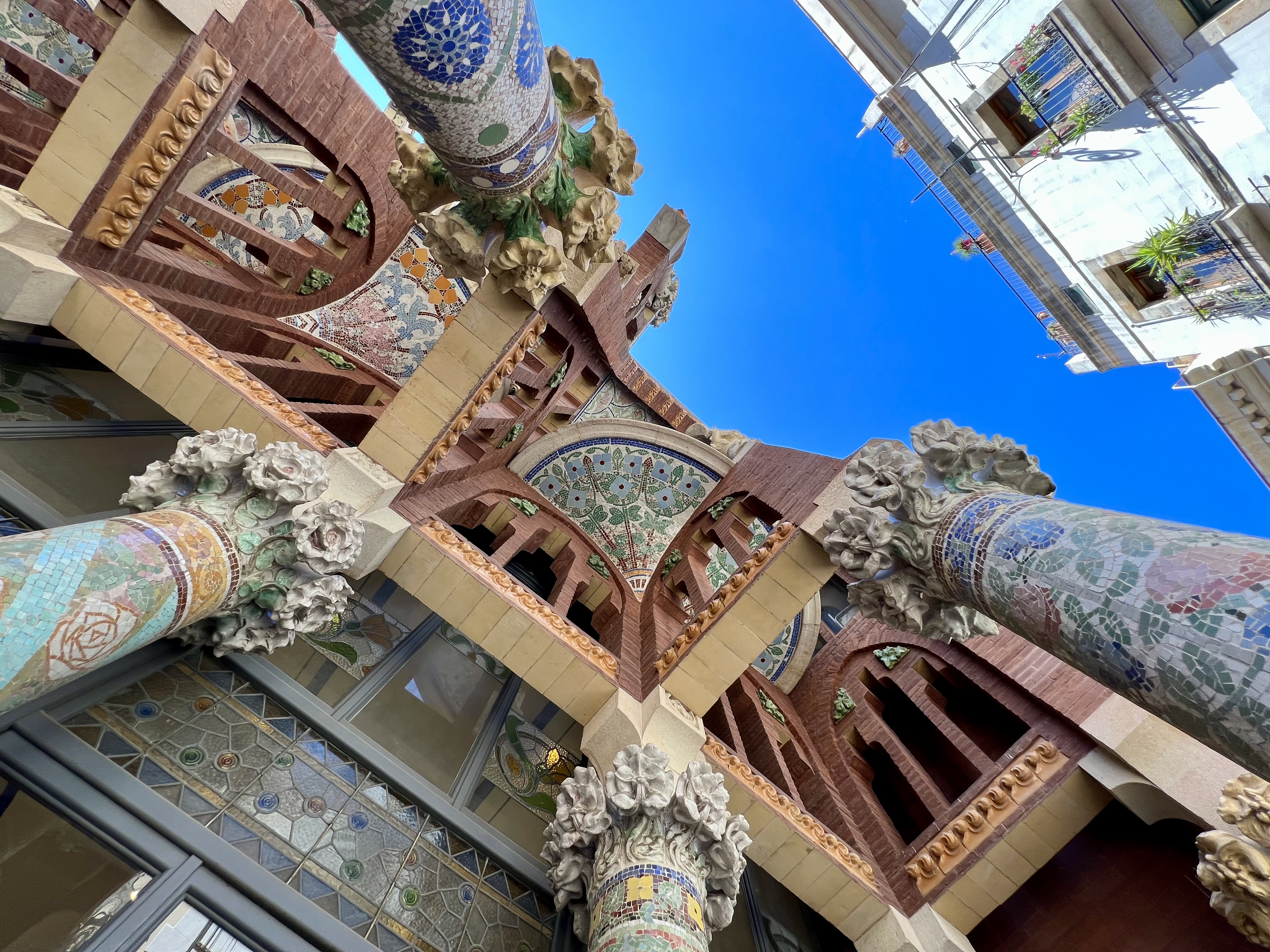
Palau de la Musica Lecture Notes
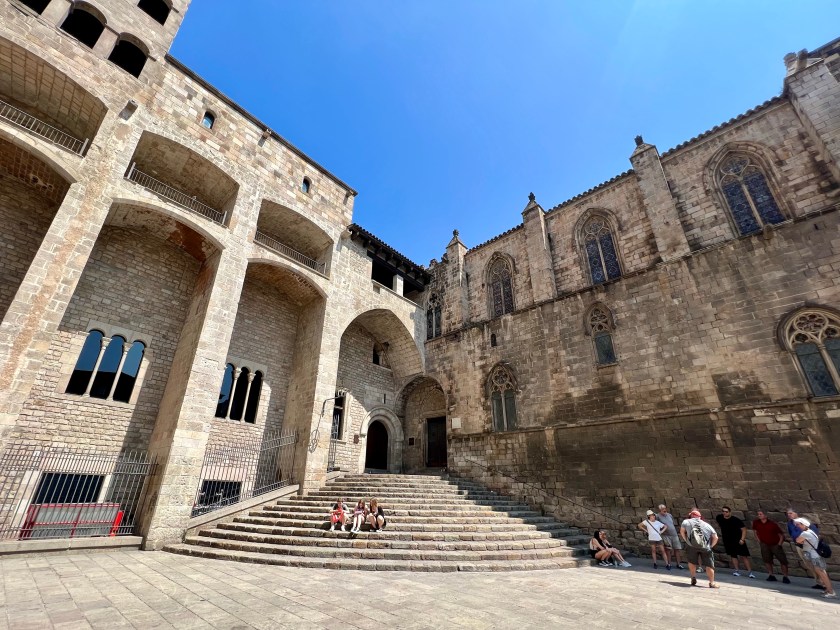
PALAU REIAL MAJOR DE BARCELONA
PARK GUELL
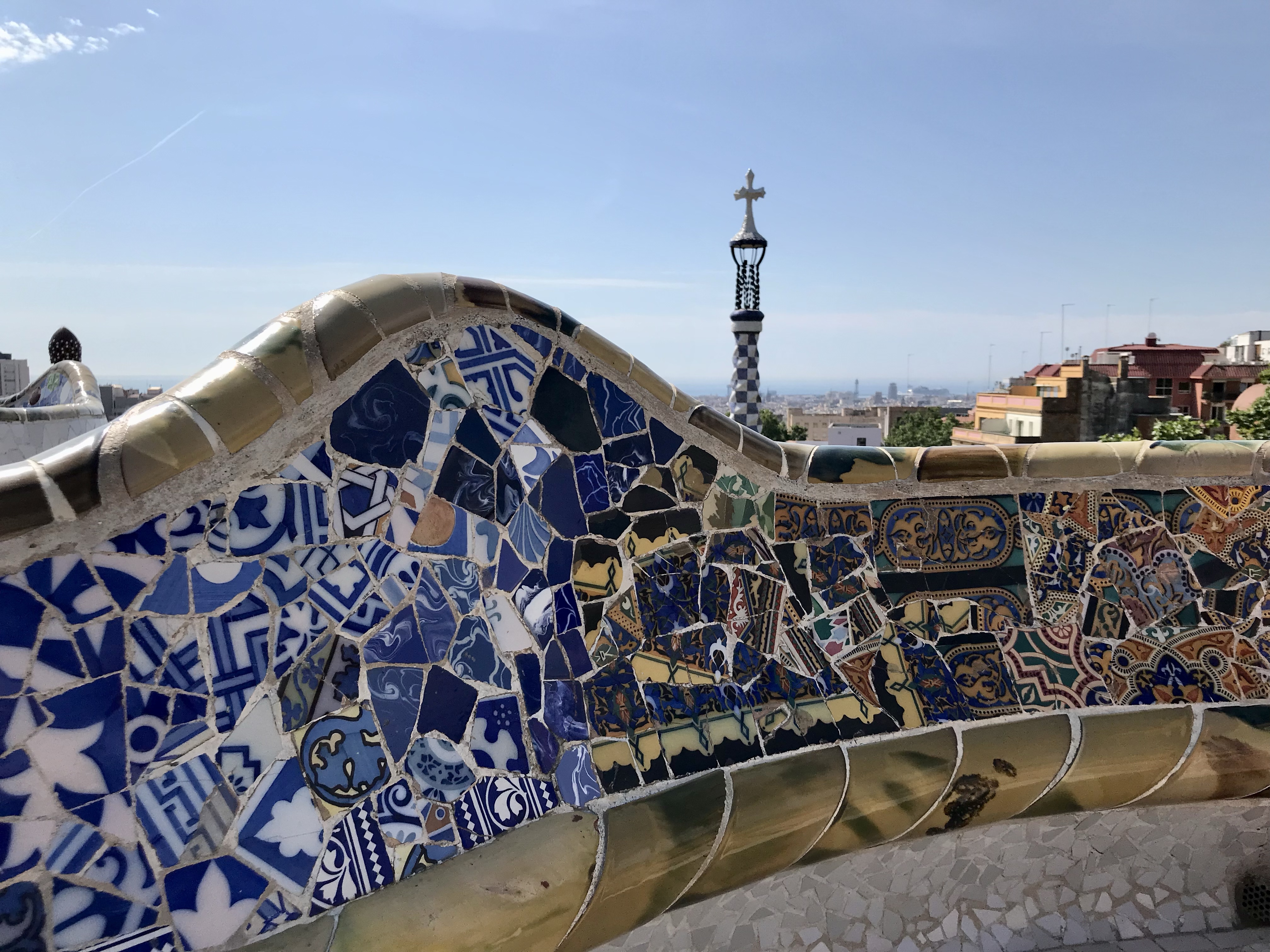
Official Website of Park Guell: https://parkguell.barcelona/en/park-guell/origin-and-creation
PLAÇA DE CATALUNYA
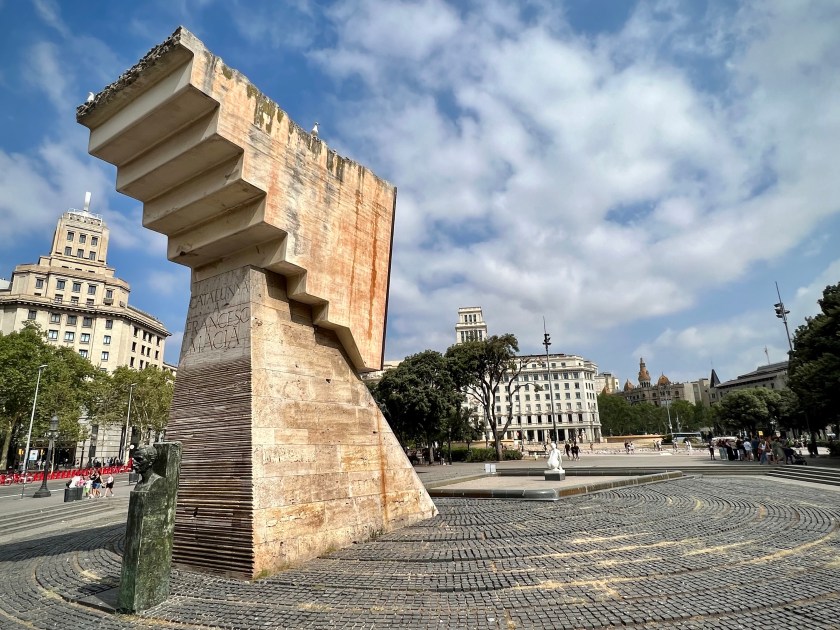
“Plaça de Catalunya was built in 1889, following Barcelona’s Universal Exhibition. Its purpose then, as it is today, was to link the new Eixample district with the old centre. From the beginning it has always been one of Barcelona’s breathing spaces, packed with cafés and restaurants that have seen literary and political debates, and which are still some of the main meeting points, even today. The square, which covers 48,500 square metres, became a city icon and holds public events, concerts and various civic gatherings. These days it is a major hub and is, in fact, regarded as Barcelona’s nerve centre.” https://www.meet.barcelona/en/visit-and-love-it/points-interest-city/la-placa-de-catalunya-99400356287
PLAÇA DE SANT FELIP NERI
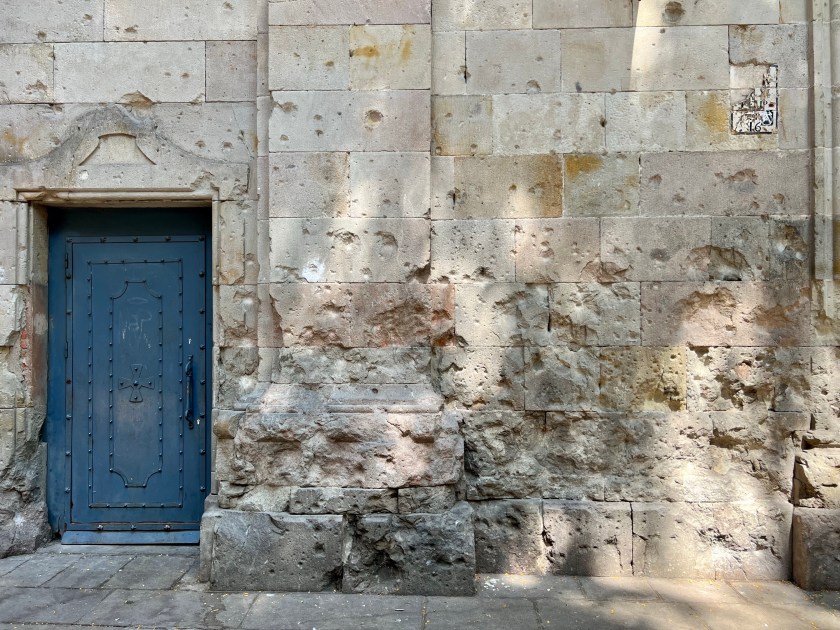
“Barcelona was continuously bombed on the morning of 30 January 1938, from 9 am to 11.20 am, by Franco’s ally, the fascist Italian air force. The Sant Felip Neri church, which was in the hands o Catalonia’s republican government, was being used as an air-raid shelter for children from the neighbourhood and other parts of the Spanish Republic, seeking refuge from the fascist terror. The bombs levelled the church, burying the children who had sought shelter in its basement. Some twenty died. The aerial bombings went on non stop, the bombs hampering efforts to evacuate the site. Forty two people were massacred that morning and over a hundred wounded. The square was devastated. The only thing left standing was the church façade, which still bears the marks of the shrapnel today. For years, Francoist propaganda offered an account of how the marks on the facade were caused by bullets from firing squads executing priests from the church, a version which covered up their part in the massacre.” City Council of Barcelona street sign
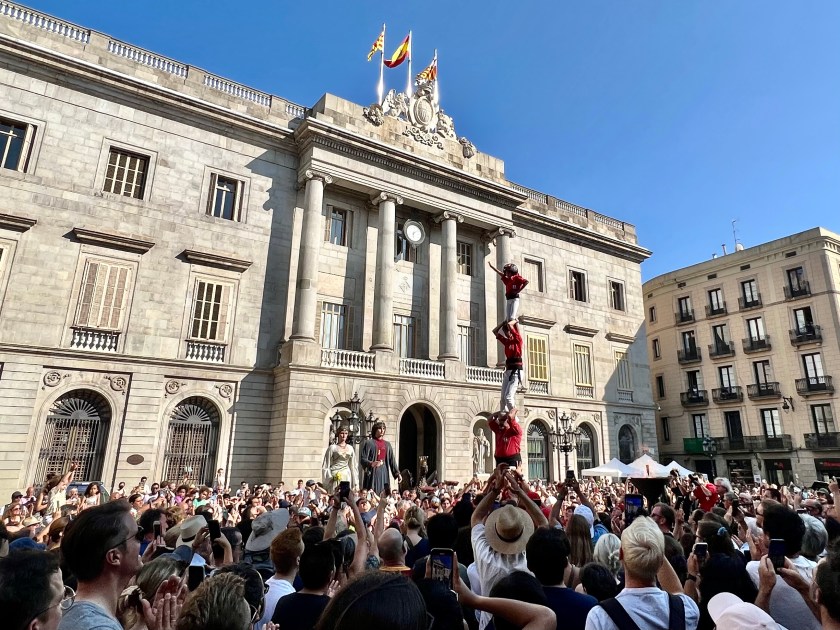
PLAÇA DE SANT JAUME
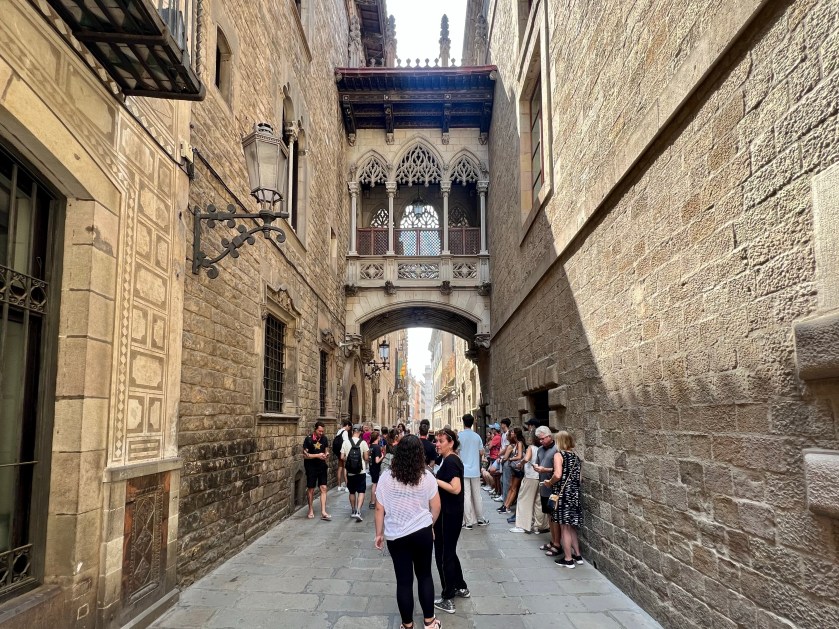
PONT DEL BISBE
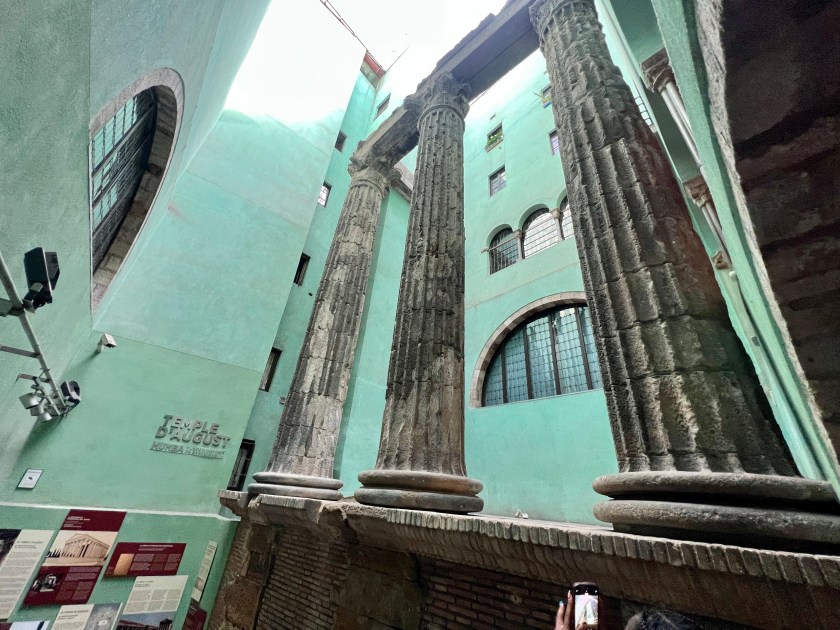
TEMPLE OF AUGUSTUS
REFERENCES AND FURTHER READING
Ajuntament de Barcelona https://www.barcelona.cat/en/
Barcelona Modernisme Route https://rutadelmodernisme.com/en/
Barcelona Turisme www.barcelonaturisme.com/wv3/en/
Hughes, Robert. Barcelona . Knopf Doubleday Publishing Group. 1992.
Palau de la Música https://www.palaumusica.cat/en
Phillips, Jr, William D.; Rahn Phillips, Carla. A Concise History of Spain (Cambridge Concise Histories). Cambridge University Press, 2017.
Steves, Rick. Rick Steves Spain (Travel Guide). Avalon Travel, 2016.
UNESCO World Heritage Foundation. whc.unesco.org/
EDITOR AND LAST UPDATE
John William Bailly 23 June 2023
COPYRIGHT © ALL RIGHTS RESERVED
 Bailly Lectures